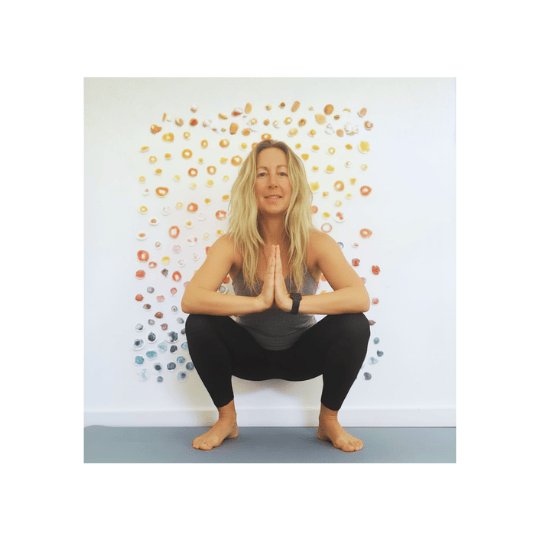
Gentle, Effective Relief Without Forcing Deep Stretches
Introduction
Tight hips and lower back pain often go hand in hand—especially with long hours sitting, stress, and the natural shifts of midlife.
If you’ve been told to stretch deeper to fix it, you’re not alone—but that approach doesn’t always work. Tightness isn’t just about short muscles; it’s often your body’s way of protecting itself. When you push into strong stretches, your system can respond by holding on even more.
A gentler, slower approach—using breath and mindful movement—helps your body feel safe enough to release tension naturally. This is why yoga therapy focuses less on forcing flexibility and more on working with your body, not against it.
In this 30-minute practice, you’ll ease tight hips, support your lower back, and calm your nervous system at the same time.
Why Hips & Lower Back Are So Connected
The hips and lower back are part of the same functional system. When the hips are tight or restricted, the lower back often compensates—leading to discomfort or pain.
Common causes include:
- Prolonged sitting
- Stress and nervous system tension
- Hormonal shifts (especially during menopause)
- Lack of gentle, consistent movement
Rather than isolating the problem, yoga therapy works by restoring balance across the whole body.
A Different Approach: Slow + Supported
In this practice:
- You won’t force stretches
- You’ll move slowly with your breath
- You’ll allow the body to release rather than push
This helps shift your body out of fight-or-flight and into a state where real release can happen
Your 30-Minute Practice
Move slowly and stay within a comfortable range. If anything feels painful, ease out.
Pose Modifications & Support Options
These options allow you to tailor the practice to your body. Always choose the version that feels most supportive, not most intense.
1. Grounding + Gentle Breath (5 minutes)
- Lie on your back, knees bent, feet on the floor
- Rest one hand on your belly
- Allow your breath to soften
- Gently lengthen your exhale
This settles your nervous system before movement
If lying flat is uncomfortable:
- Place a pillow under your head
- Support knees with a bolster or cushion
Breathwork feels difficult, you might find these gentle techniques for calming anxiety helpful.
2. Pelvic Tilts (5 minutes)
- On an inhale, gently arch your lower back
- On an exhale, softly tilt the pelvis
Keep the movement small and slow
Releases tension in the lower back
If there is discomfort in the lower back:
- Make the movement very small
- Imagine the pelvis gently rocking rather than lifting
Alternative:Skip movement and simply notice the natural curve of your spine with breath
3. Knee-to-Chest (3 minutes)
- Lying on your back
- Hug one knee in, then switch
- optional bring both Knesset in together
Move with your breath
Gently opens the hips and relieves back pressure
If lower back is sensitive:
- Keep one foot on the floor while moving the other leg
4. Supine Twist (5 minutes)
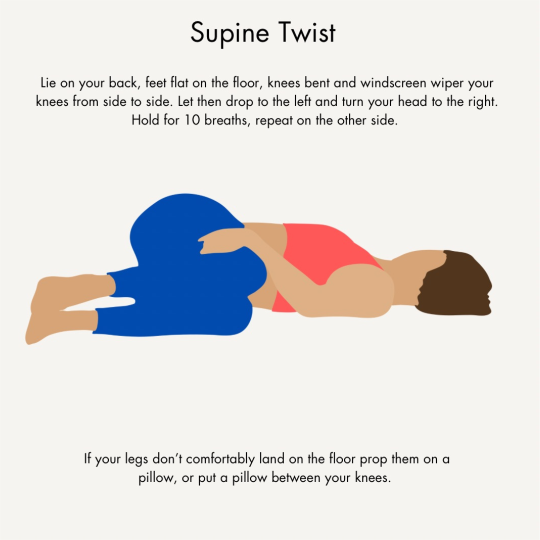
- Drop both knees to one side
- Keep shoulders relaxed
Stay and breathe then repeat on other side
Releases spine + hip tension
If twists feel too intense:
- Place a pillow or block under the knees for support
- Keep the knees higher
5. Figure-4 Hip Stretch (5 minutes)
- Lie on your back
- Cross ankle over opposite knee like a figure 4
- Gently draw legs in towards you
- You can hold behind the knee that is coming towards you if that feels comfortable
No forcing—keep it easeful
Targets deep hip tension
If this feels too strong or aggravates the hips:
- Keep the foot on the floor (don’t lift the legs)
- Or skip entirely and return to knee-to-chest
For more support:
- Place a cushion under the hips
6. Supported Bridge (4 minutes)
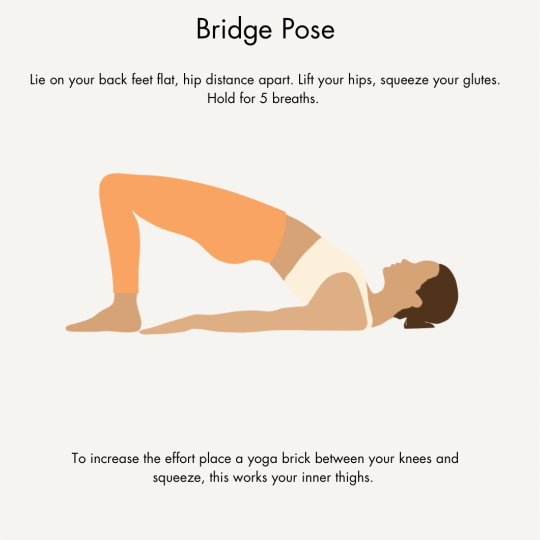
- Lift hips slightly and place a block or cushion underneath
- Rest and breathe
Allows passive release in hips + lower back
If lifting the hips feels uncomfortable:
- Use a very low support (or none at all)
- Or skip and rest in constructive rest (lying with knees bent)
If there is neck or back sensitivity:
- Ensure weight is not in the neck
- Keep the lift gentle and supported
7. Gentle Forward Fold (Seated) (3 minutes)
- Sit tall, hinge slightly forward
Keep it soft—not a deep stretch
Lengthens the back body
If hamstrings or back feel tight:
- Sit on a cushion or block
- Bend the knees generously
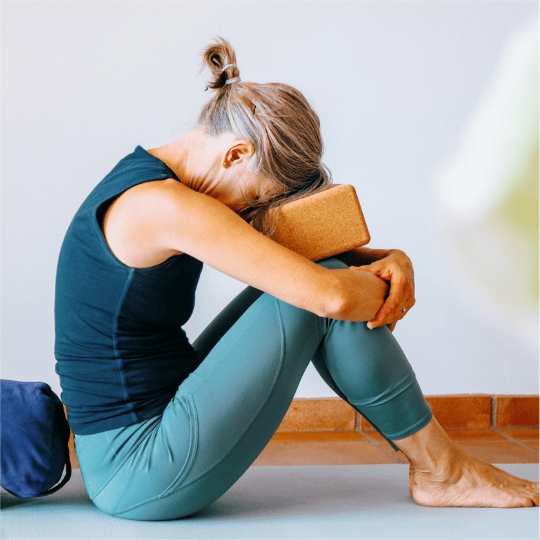
If forward folding aggravates the back:
- Stay upright and focus on lengthening the spine
- Or skip and return to lying down
Optional: Add a Calm Finish
Take 2–3 minutes lying down, letting your breath settle naturally
This helps your body integrate the practice
- Focus: Integration of movement and breath
- Cue: “Notice the subtle shifts in your hips, back, and spine. Let your breath flow naturally and your body settle into calm.”
- Tip: Stay present with sensations without judgment; allow your nervous system to absorb the practice
Key Takeaway
Relief doesn’t come from pushing harder—it comes from working with your body, not against it.
When you combine gentle movement with breath, you create the conditions for real, lasting release.
Conclusion
If you’re navigating menopause, stress, or ongoing tension, this kind of practice can make a meaningful difference over time.
Save this routine and come back to it regularly
Read more about techniques to feel more like yourself in menopause. And regulating your nervous system
Leave a Reply