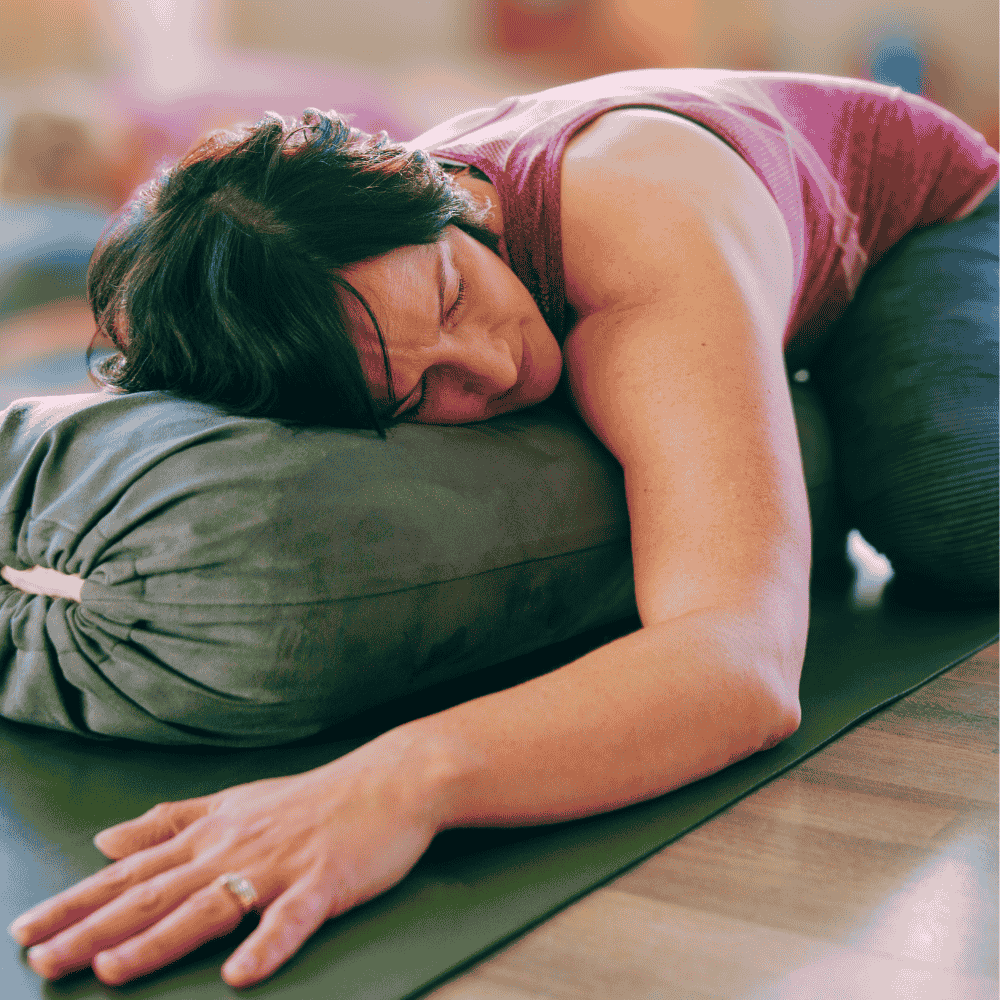
How can yoga therapy help with anxiety?
Anxiety is often treated as a thinking problem.
But often, it’s a nervous system pattern.
When anxiety rises, your body shifts into protection mode. your heart rate increases. Breath becomes shallow. Muscles brace. Attention focuses. Even when there is no immediate danger, the system behaves as if there is some kind of threat.
Over time, this pattern can repeat itself — even becoming your default response..
For a deeper look at how yoga therapy builds nervous system regulation — and why that changes everything — start here.
Yoga therapy addresses the physiology involved when you are struggling with anxiety.
Rather than working on intensity, yoga therapy focuses on regulation. Through specific breath pacing, structured movement, interoceptive awareness, and carefully sequenced rest, your nervous system is guided toward stability.
This is not about forcing a feeling of temporary calm.
It’s about building capacity.
When the nervous system learns it can move from activation back to steadiness, anxiety becomes less overwhelming. You may still experience stress, but you recover more speedily. Reactivity softens. Sleep improves. Emotional regulation gets stronger.
Yoga therapy sessions are personalized and paced according to what your system can tolerate on the day. That pacing matters. Too much stimulation can increase activation. The right amount builds resilience.
Over time, yoga therapy supports:
- Improved stress recovery
- Increased vagal tone
- Better breath efficiency
- Reduced baseline tension
- Greater emotional flexibility
Anxiety is not a personal failure. It is a learned physiological response. And the nervous system can recover, with guidance and time.
.Living with anxiety can feel exhausting — like your system never fully powers down.
Imagine what it would feel like to trust your body again. To know you can return to calm. To respond instead of react.
That shift is possible. And it doesn’t require intensity — just the right pace and the right tools.
Leave a Reply