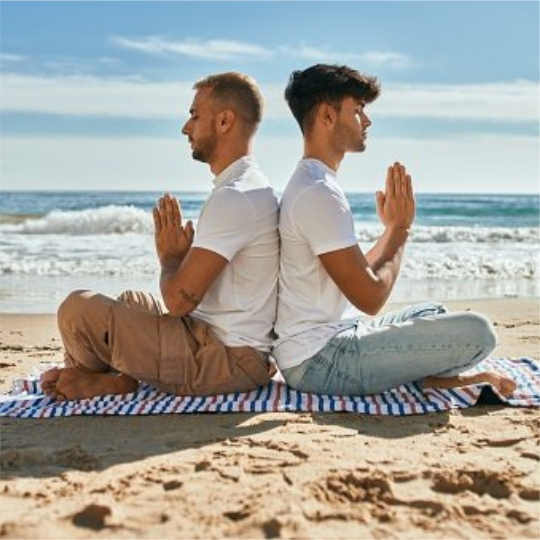
Relationships don’t struggle because partners don’t care. They struggle because stress patterns live in the body. Over time, tension, protective habits, and unspoken emotions shape how we speak, listen, and respond.
Partner yoga therapy offers a different entry point — not through debate or analysis, but through breath, awareness, and shared embodied experience. When two nervous systems begin to regulate together, communication softens, trust rebuilds, and connection becomes possible again.
This isn’t about flexibility. It’s about presence.
What makes couples yoga therapy different?
Traditional talk therapy works through conversation. Yoga therapy works through the body.
In our sessions, you and your partner are guided through simple, supported movement, breath practices, and restorative positions that help:
- Reduce stress responses
- Increase emotional regulation
- Build attuned awareness
- Create shared moments of calm
When the nervous system feels safe, connection follows naturally..
What a session feels like
Each session begins with a gentle check-in — not to analyze, but to notice what’s present.
From there, you’ll move through guided practices designed to support co-regulation. You may synchronize breath. You may practice supported postures that encourage trust and receptivity. You’ll be invited to observe sensation rather than react to it.
Sessions close with integration — space to reflect, soften, and carry that awareness back into your relationship.
The pace is calm. The environment is grounded. The work is subtle, but deeply impactful.
Who this is for
Partner or couples yoga therapy can support you if:
- You feel disconnected but want to rebuild closeness
- Communication feels reactive or tense
- You’re navigating transition, stress, or life changes
- You want to deepen intimacy in a grounded, embodied way
You don’t need to be “good at yoga.” You simply need to be willing to show up.
10 reasons you should try couples yoga therapy
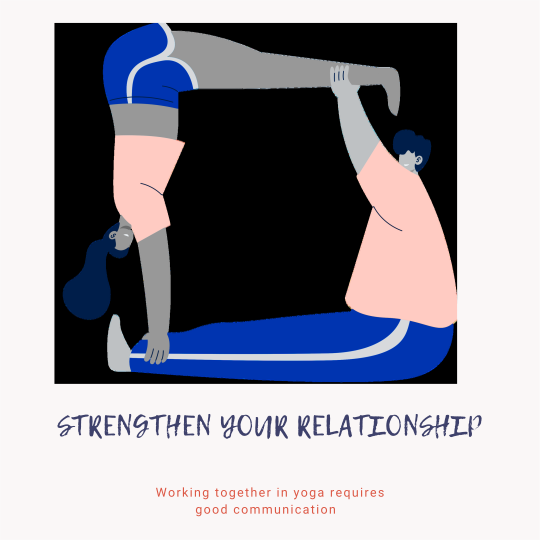
1. Strengthen your relationship
When you have a couples yoga therapy session you work on breath work, mindful movement, and embodied awareness. This practice lets you to see yourself, your partner, and your relationship from a fresh perspective. What stands out during a session can help you gain new insights into your bond and can ultimately allow you to work towards strengthening your relationship.
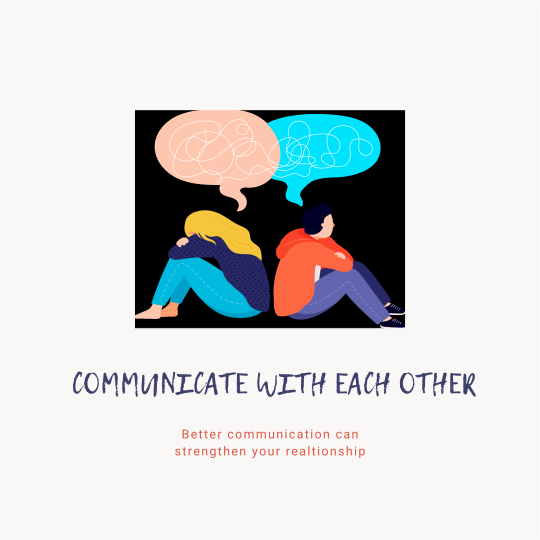
2. Improve your communication
Healthy relationships are built on good communication. To communicate well you must also listen. Listening is about understanding what your partner is trying to communicate to you. In couples yoga therapy you work together and practice communicating with each other.
3. Spend some time with each other
Spending time with together means you have shared experiences. This will strengthen the bonds of your relationship. Life gets busy. It’s easy to put your relationship on the back burner. Carving out “us” time sets the intention to spend quality time with your partner.
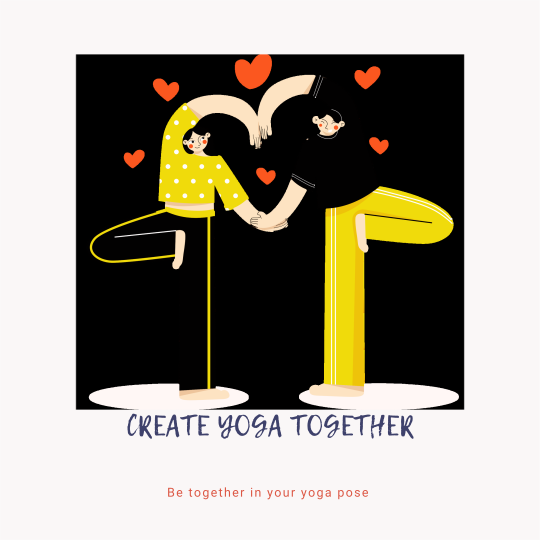
4. Create together
Creating something together can be a powerful experience. Making yoga poses together can make you laugh and sometimes make you cry but the experience is something you get to share. The yoga poses in couples yoga therapy are created by you both as you come together to form one pose. You co-create a shape by communicating with your partner and together you find the shape that works for you both.
5. Connect deeply with your bodies
When you connect with your body in a yoga pose, you notice thoughts, feelings, and emotions. During a couples yoga therapy session, you will be coached to become embodied in your poses. Embodiment is when you are in a state of focused awareness, feeling fully present and grounded in your body. Here you connect deeply with your body and can deepen your connection with your partner.
6. Rediscover intimacy
When you create poses together you see each other in a new light. You might be reminded of your partner’s positive qualities. Their strength, their humor, or their ability to be vulnerable. Being together, breathing together, supporting and being supported creates a special sort of intimacy.
7. Learn how to set boundaries
Setting boundaries gives you the space you need, to flourish. In a relationship setting boundaries allows each partner to carve out the space they need for their mental and emotional well-being. By setting boundaries you know when to walk away from a toxic situation. In a yoga therapy session you practice setting boundaries. You experience the felt sense of boundaries. When stopping before a stretch is beyond your limits. Reigning back if you feel you have gone a little far in a posture. Or experiencing the feeling of space and freedom in some poses. Having a felt sense in your body can help reinforce a behavior.
8. Just be
Being able to just be with what is. Being accepting of yourself for who you are. Accepting your partner for who they are. Accepting the situation you are in right now. Seeing things for what they truly are, and letting go of judgment and ego. From this new stance you can make healthy changes and move forward in a meaningful way. Accepting limitations of flexibility, strength and balance is all part of the yoga practice. What you practice on the mat you can take away with you and use in your life.
9. Release trauma
In a yoga therapy session, you may notice thoughts, feelings, and emotions while you are in a posture. This is because our bodies, minds, and nervous systems have been present throughout our whole lived experience, so it is not surprising that some events from our past may still be residing in our body. The more embodied you are, the deeper you have dropped in, the more likely it is that emotions will surface. Couples yoga therapy is a safe space for you and your partner to explore what comes up for each of you during a session.
10. Learn to love yourselves
The yoga mat is a great place to remind yourself that your body and mind are strong. Here you may experience gratitude for your body, and appreciation for the breath that keeps you steady and grounded.
Connection doesn’t begin with fixing each other. It begins with safety.
If you and your partner are ready to explore a calmer, more attuned way of relating, I invite you to schedule a complimentary consultation. Together, we’ll explore whether couples yoga therapy is the right next step for you.