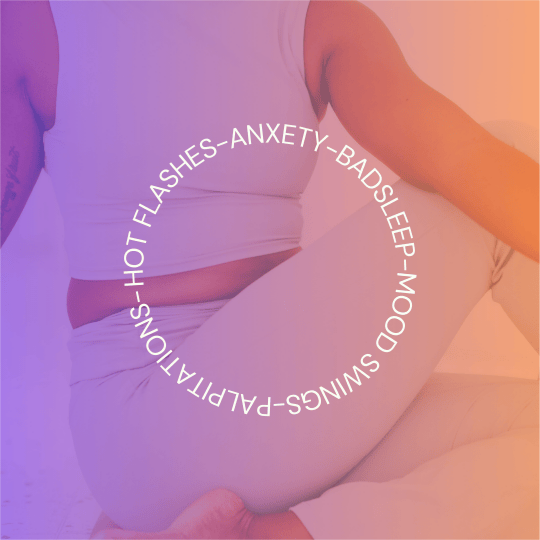
Most menopause advice focuses on hormones alone. But many of the most disruptive symptoms—hot flashes, anxiety, poor sleep, heart palpitations and mood swings—are very much nervous system driven. Discover how a nervous system reset can help with menopause symptoms.
From a yoga therapy perspective, menopause is not only a hormonal transition.
It is a stress-sensitive nervous system event.
That’s why practices focused on “burning energy” or “pushing through” often make symptoms worse—not better.
This article explains what a true nervous system reset looks like during menopause, and how yoga therapy supports regulation, resilience, and symptom relief.
What does “Nervous System Reset” mean in menopause?
A nervous system reset is not about fixing or forcing the body.
It’s about helping the system return to baseline after prolonged activation.
During perimenopause and menopause:
- Estrogen fluctuations increase nervous system sensitivity
- Stress tolerance decreases
- Recovery time lengthens
- The body enters sympathetic activation more easily
In simple terms:
The system reacts faster and settles slower.
A nervous system reset practice helps to:
- Reduce sympathetic dominance (fight/flight)
- Increase parasympathetic tone (rest/digest)
- Improve vagal regulation
- Restore a felt sense of safety in the body
Why yoga therapy works so well for menopause
Yoga therapy is uniquely effective during menopause because it:
- Works directly with the autonomic nervous system
- Emphasizes regulation over performance
- Uses breath, movement, and stillness strategically
- Adapts to sensitivity rather than overriding it
Unlike fitness-based yoga, yoga therapy does not aim to exhaust the body.
It aims to signal safety.
And safety is what allows hormones, sleep, mood, and temperature regulation to stabilize.
The elements of a nervous system reset practice
A reset practice includes five key components
1. Arrival & Orientation
Purpose: Reduce the feeling of threat
This phase helps the brain register:
- Where you are
- That you are supported
- That nothing requires immediate action
Some practices you might experience:
- Supine or side-lying rest
- Hands on belly and chest
- Gentle visual orientation
- Natural, unforced breathing
This is especially important during menopause, when hypervigilance is common.
2. Regulated Breathing
Purpose: Support your vagal tone without strain
The goal is not deep breathing—it’s easy breathing.
Helpful techniques include:
- Slightly extended exhale
- Soft three-part breath
- Nasal breathing only
The point is to avoid breath retention or forceful pranayama, which can increase hot flashes or anxiety.
3. Gentle, Repetitive Movement
Purpose: balancing effort and ease
During menopause, the nervous system responds best to:
- Predictable patterns
- Small ranges of motion
- Slow pacing
Examples include:
- Pelvic tilts
- Windshield wipers
- Small cat–cow
- Arm movements synchronized with breath
Repetition is key.
Repetition tells the nervous system all is well.
4. Supported Stillness
Purpose: Integration
Supported postures allow the nervous system to absorb the effects of the practice.
Helpful supports include:
- Bolsters
- Blankets
- Light weight over the abdomen
- Low, supported backbends or legs supported on props
Weight and warmth are especially calming for menopausal nervous systems.
5. Gentle Closing Awareness
Purpose: Carry the regulation gained in the practice forward
Instead of striving for relaxation, just notice:
- A slightly slower breath
- A softer jaw
- A small sense of settling
Menopause responds to consistency, not intensity.
How this helps menopause symptoms
A regular nervous system reset practice can support:
- Reduced hot flash intensity and frequency
- Improved sleep quality
- Lower baseline anxiety
- More stable mood
- Better stress recovery
- Improved heart rate variation (HRV- measured on your Apple Watch or garmin tracker etc) and resilience
Importantly, this approach works with hormonal change rather than fighting it.
What a nervous system reset is not
A reset practice is not:
- Power yoga
- Long strong holds
- Breath of fire or intense pranayama
- Pushing through discomfort
These approaches may be appropriate in other situations—but during menopause they can overstimulate an already sensitive system.
However we do know that weight bearing exercises are vital during menopause in order to prevent osteoporosis. Lifting weights should still be practiced but alongside the more gentle practices that work towards regulating the nervous system.
How often should you practice?
For best results:
- 15–25 minutes
- 3–5 times per week
- Ideally in the evening or before bed
Consistency matters more than duration.
Final thoughts
Menopause doesn’t mean your body is broken.
It means the nervous system needs more support.
A yoga therapy–based nervous system reset offers a grounded, effective way to navigate this transition with steadiness, clarity, and care.
Leave a Reply